
Use this guide to explore possible causes of staining on brick, stone and masonry. Colour is a useful clue, but it cannot confirm a diagnosis. Water Marsh assesses the material, its condition and the source of the problem before proposing treatment.
White stains & mineral deposits
Efflorescence and soluble salts
What is it? White powder or crystals on brick or stone.
What causes it? Moisture carries soluble salts through masonry; deposits remain as it dries.
Can it be removed? Light deposits may weather away; persistent deposits can return while moisture movement continues.
Treatment considerations We establish whether the deposit is soluble salt or another mineral, assess moisture sources and select treatment for the particular masonry.
Lime, calcium and hard mineral deposits
What is it? Pale streaks or harder crusts, often below joints or water paths.
What causes it? Water can carry material from mortar, concrete or adjacent construction.
Can it be removed? Established deposits may need specialist treatment. Removing them must not sacrifice the underlying surface.
Treatment considerations We distinguish deposits from the stone itself and test a compatible approach. A general acidic brick cleaner is not a universal solution.
Black stains, pollution & crusts
Carbon, traffic film and general pollution
What is it? Grey or black soiling across exposed façades or sheltered details.
What causes it? Airborne particles accumulate differently according to exposure, texture and water flow.
Can it be removed? Cleaning can improve many deposits, but an even new-looking finish is not always appropriate or achievable.
Treatment considerations We assess whether marks are pollution, biological growth or both, then trial a suitable cleaning method.
Sulphation and gypsum crusts
What is it? Hard crusts, sometimes darkened by trapped dirt, on susceptible stone.
What causes it? Pollution-related reactions can alter the surface of some limestone and other calcareous masonry.
Can it be removed? A crust can be bound into a weakened surface. Complete removal may remove original material and may be inappropriate.
Treatment considerations We examine the crust and stone beneath, agree a conservation-sensitive level of cleaning and consider sample areas before wider treatment.
Soot, smoke and fire staining
What is it? Dark deposits around combustion sources or following a fire.
What causes it? Smoke and soot settle on or penetrate porous masonry.
Can it be removed? Surface contamination may improve, but cleaning cannot reverse heat damage or restore lost material.
Treatment considerations The condition of fire-affected masonry needs assessment before cleaning. Any repair work is considered separately.
Green stains & biological growth
Algae, moss, lichen and mould
What is it? Green, black or patchy growth; moss and lichen may form visible colonies.
What causes it? Damp, shade and local conditions encourage colonisation.
Can it be removed? Existing growth can often be treated. Regrowth depends on the environment and is not permanently prevented.
Treatment considerations We consider surface condition, appropriate controlled cleaning and biological treatment where suitable; fragile surfaces need particular care.
Ivy and vegetation marks
What is it? Attachment traces and organic marks after climbing vegetation is removed.
What causes it? Plant growth and trapped moisture can affect the surface and joints.
Can it be removed? Some residues can improve; embedded marks or damage may remain.
Treatment considerations We assess the masonry and joints before trying to remove attachments. Pulling or aggressive scraping can damage vulnerable surfaces.
Bird fouling
What is it? Deposits on ledges, capitals, parapets and sheltered features.
What causes it? Repeated roosting can build up contamination.
Can it be removed? Deposits can usually be addressed, although staining or surface change may remain.
Treatment considerations We plan controlled removal and protection of people and neighbouring areas; cleaning alone does not prevent future roosting.
Rust, metals & unusual staining
Rust, iron and copper staining
What is it? Orange or brown marks, or green to blue-green staining.
What causes it? Metal fittings, rainwater goods and other building elements can shed staining onto masonry; minerals within a material may also contribute.
Can it be removed? Specialist treatment may reduce staining, but an ongoing source can cause recurrence.
Treatment considerations We investigate the source and substrate, protect adjacent finishes and test a suitable treatment rather than identifying the metal from colour alone.
Vanadium staining
What is it? Yellow-green or other unusual discolouration on some clay bricks.
What causes it? Vanadium compounds in certain bricks can produce staining associated with moisture and unsuitable cleaning.
Can it be removed? The correct specialist treatment can help; the wrong cleaner may worsen the stain.
Treatment considerations We check the brick manufacturer’s guidance and cleaning history before selecting a product and sample area.
Manganese staining
What is it? Brown or dark staining that can occur on some manganese-containing bricks.
What causes it? Moisture and chemical reactions can mobilise compounds from the brick.
Can it be removed? Treatment may improve the stain; continuing moisture or unsuitable cleaning can sustain the problem.
Treatment considerations We distinguish it from ordinary dirt and iron staining, then use manufacturer guidance and controlled trials.
Construction residues & coatings
Mortar smears, cement haze and construction dirt
What is it? Films, splashes or heavier residues following building or repointing work.
What causes it? Mortar, cement and construction materials remain on the face of the masonry.
Can it be removed? Results depend on residue thickness and the sensitivity of the underlying brick or stone.
Treatment considerations We identify both materials, protect joints and adjacent finishes, and test a compatible method. Cleaning is not a reason to erode the surface.
Paint and previous coatings
What is it? Layers of paint or other finishes concealing masonry.
What causes it? Historic decoration, protection or previous repair work.
Can it be removed? Removal may be possible, but deep pigments, repairs and surface variation can remain.
Treatment considerations We consider whether removal is appropriate, the coating and substrate, and a test area. Historic paint may be significant rather than simply unwanted dirt.
Graffiti and residual shadows
What is it? Paint or ink marks, sometimes with a remaining outline after treatment.
What causes it? Pigments can enter the pores of masonry.
Can it be removed? Many marks can be reduced; complete removal of absorbed pigment cannot be guaranteed.
Treatment considerations We choose treatment for the coating and surface and assess any remaining shadow separately.
Water, absorbed stains & weathering
Water-run marks and damp-related staining
What is it? Streaks beneath gutters, copings, sills or repeated water paths.
What causes it? Leaks, overflow and persistent wetting can carry deposits and encourage growth.
Can it be removed? Cleaning can improve visible marks, but an unresolved water source may recreate them.
Treatment considerations We identify the likely staining and flag rainwater or drainage defects for separate attention.
Oil, grease, tar and bitumen
What is it? Dark or greasy patches, sometimes absorbed below the surface.
What causes it? Spills, vehicle use, historic coatings or adjacent building materials.
Can it be removed? Surface deposits may improve; older absorbed stains can remain.
Treatment considerations Local specialist treatment may be appropriate after testing. We agree likely improvement and any additional treatment in the scope.
General weathering and ingrained dirt
What is it? Dulling, uneven colour or long-established soiling.
What causes it? Exposure combines dirt with natural ageing, wear and previous repairs.
Can it be removed? Cleaning can reveal colour and detail, but weathering and physical loss are not removable dirt.
Treatment considerations We separate contamination from deterioration and agree a finish that respects the material’s age and condition.
How we select a cleaning method
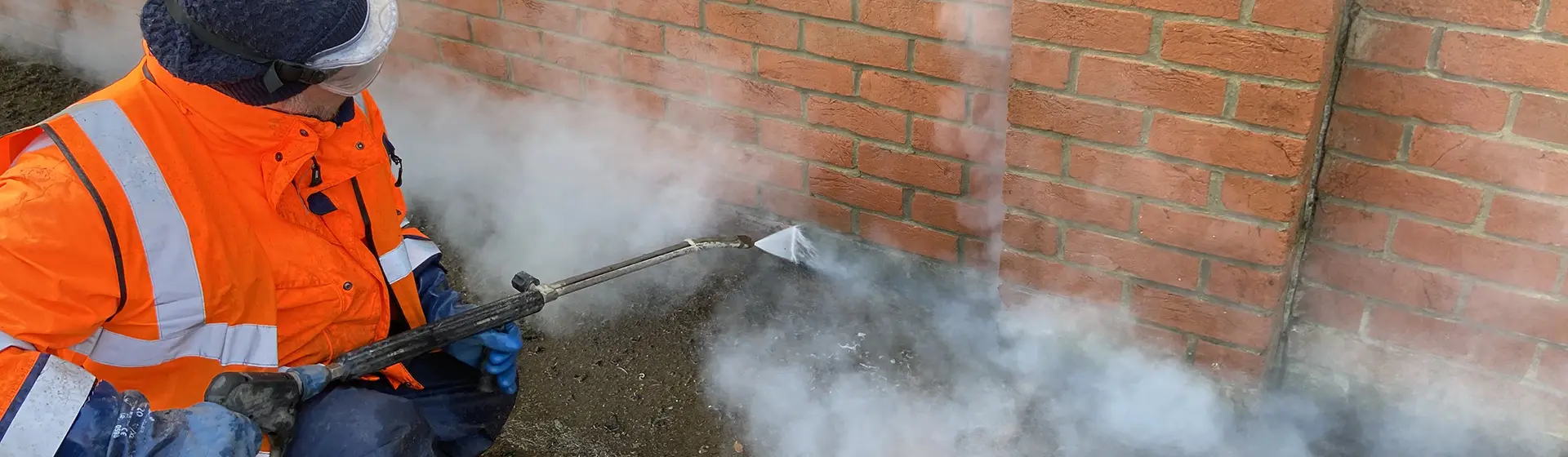
DOFF uses heated water with controlled pressure and flow. TORC uses a swirling mixture of air, water and fine granulate. Either may be considered alongside other specialist methods, subject to the surface, contamination and testing. No system is automatically suitable for every historic building.
Send photographs for an assessment
Include your postcode, overall views, close-ups of the staining and material, and access routes. Tell us about previous cleaning, coatings, leaks and protected status. Some projects need a survey or test area before the scope is agreed. We work across Surrey, Sussex and Hampshire.